RESEARCH
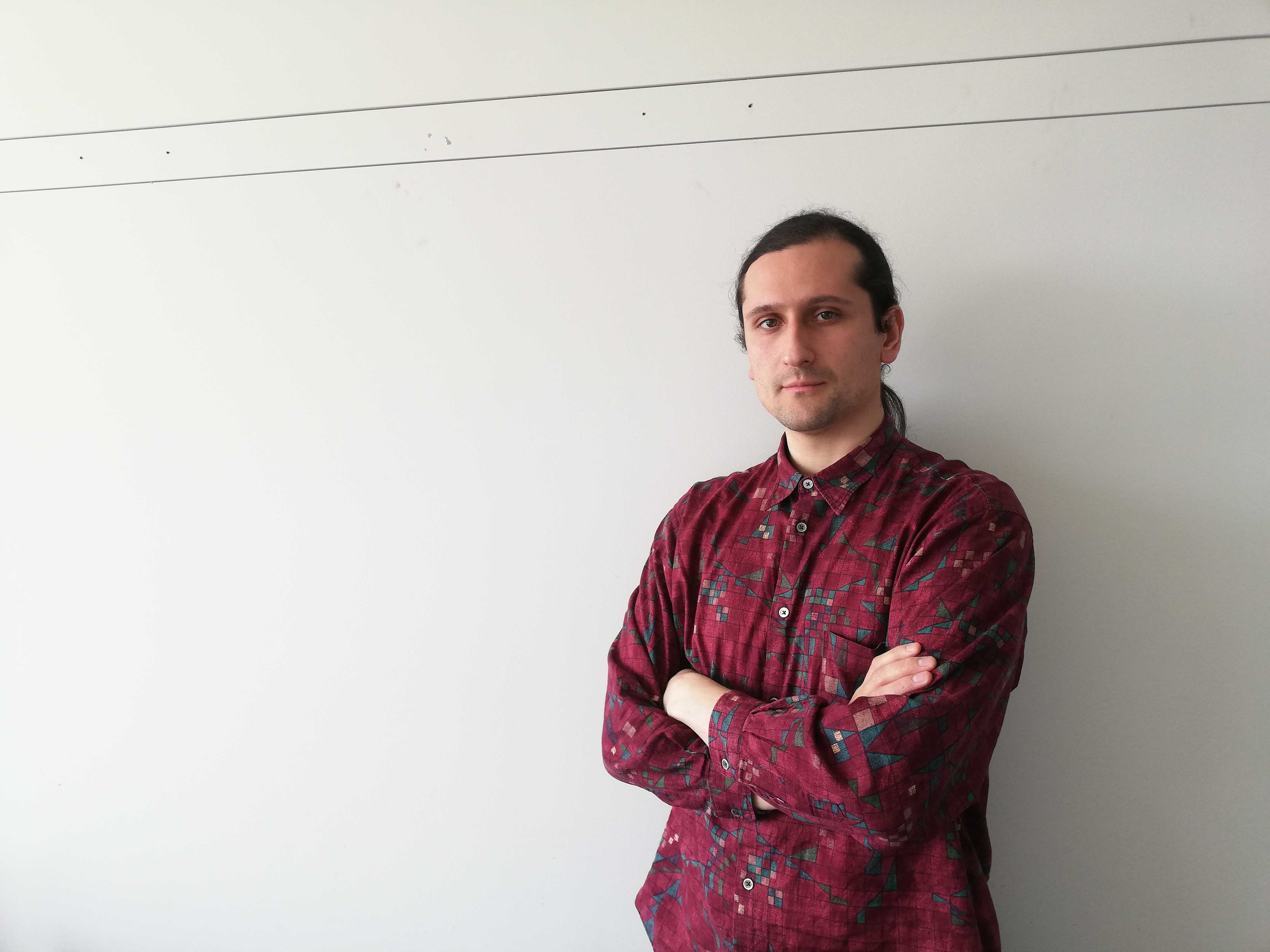
Zefan Sramek
ゼファン・シュラーメク
About Me
I recently completed my Doctor of Philosophy in Electrical Engineering and Information Systems in the Interactive Intelligent Systems Laboratory (https://iis-lab.org) at The University of Tokyo. My dissertation is titled: A Study of and Design Framework for Supporting Human Agency in the Use of Information Technology. My ongoing research is on the relationships between human agency, the use of digital technologies, and psychological well-being. More broadly, my research interests include: creative and musical technologies, the social impacts of online communication, agency in human-machine interaction, philosophical approaches to technology, human-centred privacy, and cultural, media, and gender studies.
My CV
Research Projects
Investigating Feature-Level Social Media Use and Mental Health and Well-Being
Maladaptive use of smartphones and social media is a growing issue that has received considerable attention from researchers both to map out its psychological and behavioural processes, and to develop interventions to help users regulate their use at either the device or app level. However, heterogeneous findings about the relationships between maladaptive use, mental health conditions, well-being, and patterns of smartphone use suggest the need for more nuanced examinations of feature-level usage patterns. In this project we aim to develop a nuanced understanding of the feature-level patterns of maladaptive social media use, which can contribute to new approaches to interventions and ultimately improve users' well-being.
Beyond the Feature Level: A Cluster Analysis of Feature-Level Social Media Behaviour Patterns, Maladaptive Use, and Psychological Well-BeingZefan Sramek, Sachinthya Lokuge, Tia Sternat, Martin A. Katzman, and Koji Yatani.
Proceedings of the ACM on Interactive, Mobile, Wearable and Ubiquitous Technologies 2025.
~
Rethinking Human-Computer Interaction's Role in Capitalism and Technology Hype Cycles
The history of information technology development has been characterized by consecutive waves of boom and bust, as new technologies come to market, fuel surges of investment, and then stabilize towards maturity. However, in recent decades, the acceleration of such technology hype cycles has resulted in the prioritization of massive capital generation at the expense of longterm sustainability, resulting in a cascade of negative social, political, and environmental consequences. Despite the negative impacts of this pattern, academic research, and in particular HCI research, is not immune from such hype cycles, often contributing substantial amounts of literature to the discourse surrounding a wave of hype. Through a critique of technology hype cycles and an examination of research practices that can resist them, we aim to rethink HCI's role in unsustainable capitalist systems of production.
Research as Resistance: Recognizing and Reconsidering HCI's Role in Technology Hype CyclesZefan Sramek, Koji Yatani
arXiv, presented at Meta-HCI '25: First Workshop on Meta-Research in HCI, April 26, 2025, Yokohama, Japan
~
AI as Extraherics: Fostering Higher-order Thinking Skills in Human-AI Interaction
Project led by Koji Yatani: As artificial intelligence (AI) technologies continue to evolve, concerns have arisen about over-reliance on AI, which may lead to human deskilling and diminished cognitive engagement. Over-reliance on AI can also lead users to accept information given by AI uncritically, resulting in negative consequences, such as being misled by hallucinated content. We introduce extraheric AI, a concept for human-AI interaction that fosters users' higher-order thinking during task completion. Unlike dominant human-AI interaction designs, which temporarily replace or increase human cognition, extraheric AI fosters cognitive engagement by posing questions or providing alternative perspectives to users, rather than direct answers. We aim to ensure that human cognitive skills remain a crucial element in AI-integrated environments, promoting a balanced partnership between humans and AI.
AI as Extraherics: Fostering Higher-order Thinking Skills in Human-AI InteractionKoji Yatani, Zefan Sramek, Chi-Lan Yang
arXiv preprint, 2024
~
SoundTraveller: Interactive Timbre Exploration Support for Sound Authoring with Synthesizers
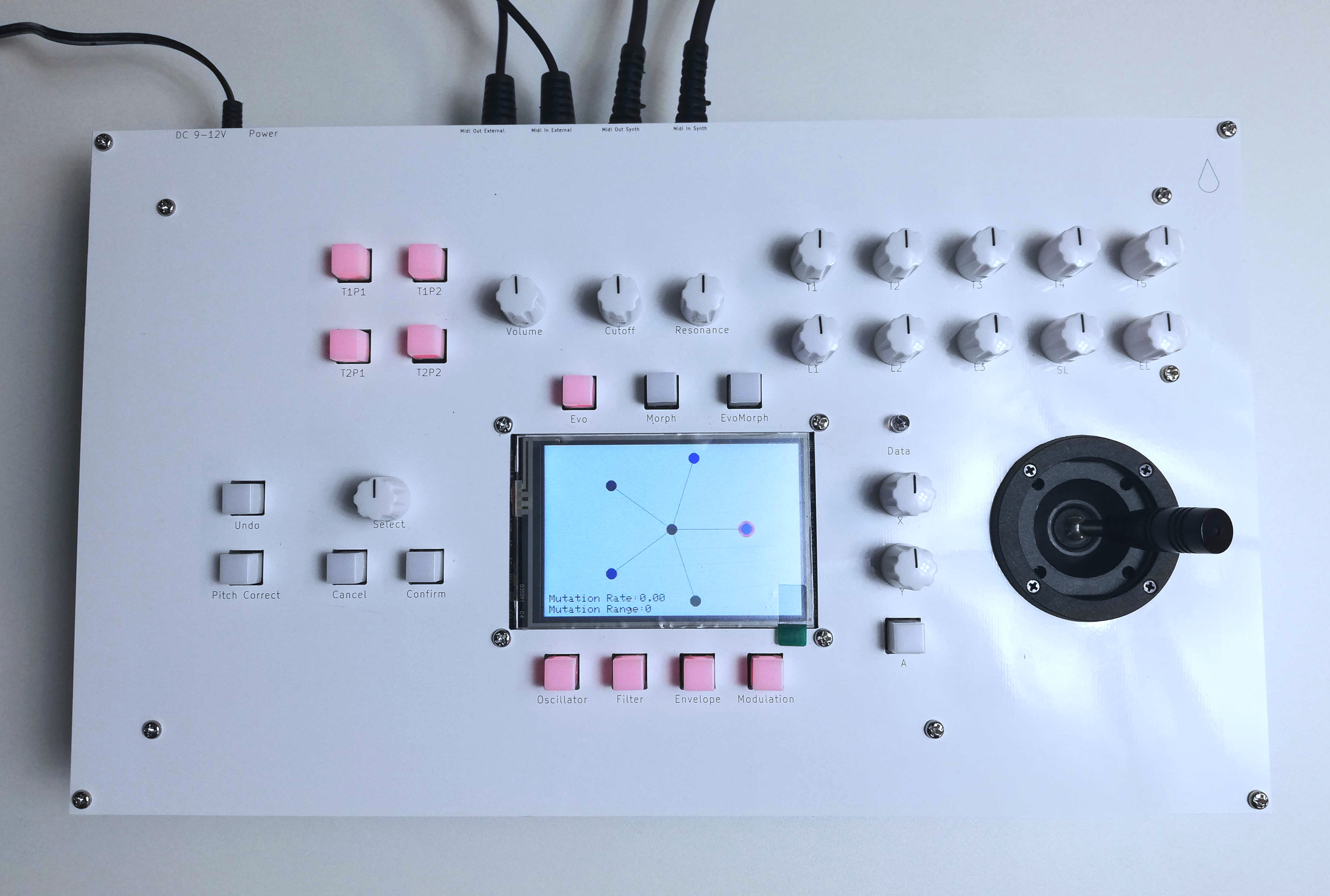
Timbre exploration and creation are key tasks in electronic music composition. Modern synthesizers can produce thousands of unique timbres, but this complexity hinders musicians’ ability to explore these timbres effectively. We developed SoundTraveller, an interactive timbre exploration system aimed at fostering electronic musicians’ creative processes. SoundTraveller allows the user to explore the timbral space using two modes: evolutionary and morphing, with which they can generate hundreds of unique timbres without the need to edit individual parameters. By abstracting away from technical parameters and providing flexible timbre explorations, SoundTraveller offers users new and inspiring ways of exploring timbre, supporting their creativity in electronic music composition. But our results also suggest that the entangled nature of SoundTraveller shifted the balance of agency between the user and system, pointing towards the complex nature of shared agency in creativity support systems.
SoundTraveller: Exploring Abstraction and Entanglement in Timbre Creation Interfaces for SynthesizersZefan Sramek, Arissa J. Sato, Zhongyi Zhou, Simo Hosio, and Koji Yatani.
ACM Designing Interactive Systems Conference 2023.
Interactive Timbre Exploration Support for Sound Authoring with Synthesizers
Zefan Sramek, Koji Yatani.
New Interfaces for Musical Expression 2021.
シンセサイザを用いた音の創作に向けたインタラ クティブな音色探索支援
Zefan Sramek, 矢谷浩司.
情報処理学会第131回音楽情報科学研究会.
Other Selected Publications
Beyond the Dialogue: Multi-chatbot Group Motivational Interviewing for Premenstrual Syndrome (PMS) ManagementShixian Geng, Remi Inayoshi, Chi-Lan Yang, Zefan Sramek, Yuya Umeda, Chiaki Kasahara, Arissa J. Sato, Simo Hosio, Koji Yatani.
ACM CHI Conference on Human Factors in Computing Systems 2025.
When Group Spirit Meets Personal Journeys: Exploring Motivational Dynamics and Design Opportunities in Group Therapy
Shixian Geng, Ginshi Shimojima, Chi-Lan Yang, Zefan Sramek, Shunpei Norihama, Ayumi Takano, Simo Hosio, Koji Yatani.
Proceedings of the ACM on Human-Computer Interaction (CSCW) 2025.
Groupnamics: Designing an Interface for Overviewing and Managing Parallel Group Discussions in an Online Classroom
Arissa J. Sato, Zefan Sramek, Koji Yatani.
ACM CHI Conference on Human Factors in Computing Systems 2023.
Bio
Zefan K.G. Sramek was born in 1994 in Toronto, Canada. In 2018 he received his Bachelor's of Applied Science in Integrated Engineering with distinction and a minor in philosophy from the University of British Columbia, in Vancouver, Canada, where he worked with Dr. Mieszko Lis, as well as in the SPIN Lab under Dr. Karon MacLean. During his degree he also completed a 1-year research internship at the Honda Research Institute Japan under Dr. Shigeaki Nishina, in Wakoshi, Saitama, Japan. In 2019 he became a recipient of the Japanese Government MEXT Scholarship, and joined the Interactive Intelligent Systems Laboratory (https://iis-lab.org) led by Dr. Koji Yatani (http://yatani.jp) at The University of Tokyo. In 2021 he received his Master of Engineering degree from The University of Tokyo. His master's research was on timbre exploration interfaces for synthesizers and electronic music. In 2026, he received his Doctor of Philosophy in Electrical Engineering and Information Systems degree from The University of Tokyo. His dissertation is titled: A Study of and Design Framework for Supporting Human Agency in the Use of Information Technology. He is also an experienced electronic music producer and visual artist.
Contact
Contact me online at:
zefanS@iis-lab.orgacademic@zefansramek.net
Or write to:
Zefan Sramek〒113-8654
Tokyo, Bunkyo-ku, Hongo 7-3-1
The University of Tokyo
Faculty of Engineering Blgd. 2, 10F, Room 101C2
Japan